
When your relationship feels routine: why it happens and what actually helps
Same dinners, same series, same Saturday. Nothing is wrong, exactly; it's just that you could predict every evening of the week. Almost every long relationship gets here. Here's why it happens, what research says brings the spark back, and twelve things to try this month.
Why routine sets in
At the start, everything about the other person is new, and new things hold our attention. Over time we get used to what we have, and that's mostly good news: familiarity is also trust, calm and knowing someone will be there. The cost is that what used to light you up becomes background. Add work, tiredness and maybe children, and evenings default to whatever takes the least effort.
So a routine isn't a sign the relationship is failing. It's a sign it needs new input.
What research says helps: new things, together
The psychologist Arthur Aron and his colleagues have studied this for decades. In a 1993 study, married couples spent an hour and a half a week, for ten weeks, on activities they had both rated either "exciting" or merely "pleasant". The couples doing the exciting ones reported a bigger rise in how satisfied they were with their marriage.
In later lab studies (2000), couples were given a new, slightly silly challenge to do together, tied at the wrist and ankle, carrying a cushion across an obstacle course, while others got a dull task. Afterwards, the couples who'd done the challenge reported more satisfaction with their relationship. The idea behind it: doing something new with someone makes you feel you're growing, and part of that feeling sticks to the person you did it with.
The practical lesson isn't "go skydiving". It's that new and a bit challenging beats pleasant and familiar, and that it works best when you do it together.
12 ways out of the routine this month
New, together
- A neighbourhood you never go to. Walk it, eat there, get a little lost.
- A one-off class: pottery, climbing, cooking, salsa. Being beginners together is half the fun.
- A recipe from a country neither of you has visited, start to finish.
- A game you've never played, from a board game to truth or dare.
Small changes to the everyday
- Swap who plans. One week each, and the plan is a surprise.
- Move dinner: the balcony, the floor, the park. Same food, new evening.
- Change the question. Instead of "how was your day?", try one of these deep questions.
- A fixed date night, even at home. Here are 40 ideas for a night in.
Closeness without an agenda
- A long hug every day when one of you gets home. Twenty seconds, not two.
- Flirt again. A message in the afternoon, a compliment you'd normally only think. Here are 50 flirty questions to start.
- Find out what you'd both like to try, privately, with a yes, no, maybe list.
And a little space
- Keep something of your own: a hobby, friends, a night out each. You have more to bring home, and you get to miss each other a bit.
When it's more than routine
Boredom is about the evenings. It's something else if you avoid each other, if every conversation turns into criticism, if one of you feels lonely even when you're together, or if neither of you wants to try anymore. Then the fix isn't a new restaurant but a direct conversation (here's how to make up after a fight), and a couples therapist can help you have it. If desire is the part that's faded, read what helps when one of you wants more.
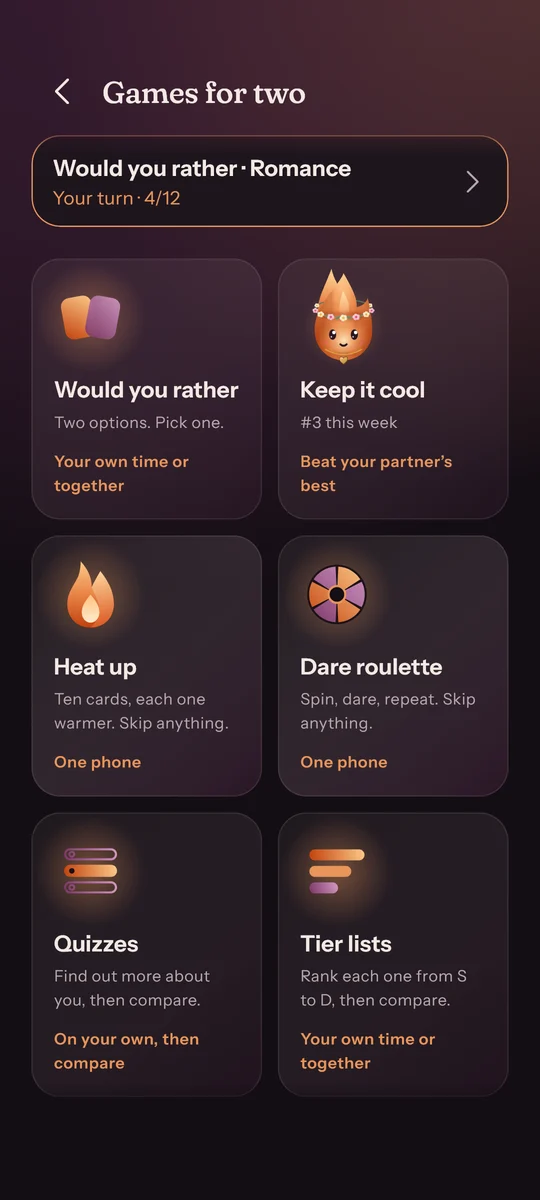
Something new every day, in small doses
La Brasa brings a little novelty into ordinary days: a new question you both answer each day, new cards to rate, and games like Would you rather, tier lists and Heat up, from sweet to spicy. Your ember, the little flame you share, grows a bit with everything you do together.
Get it on Google PlayQuestions
Is it normal for a relationship to feel boring?
Yes. After the first year or two, what was new becomes familiar, and evenings start to look alike. Familiarity is also comfort and trust; boredom just means the relationship needs some new input, not that it's over.
How do you get out of a routine with your partner?
Do new things together, even small ones: a different neighbourhood, a class, a recipe from another country, a game you've never played. Research on couples suggests that new and slightly challenging activities done together lift how satisfied people feel, more than pleasant but familiar ones.
When is boredom a sign of something bigger?
When it comes with avoiding each other, constant criticism or contempt, no wish to spend time together at all, or one of you feeling lonely in the relationship. Then it's worth talking about directly, and a couples therapist can help.